The Comprehensive Guide to Tennis Elbow: Causes, Prevention, and Lasting Relief
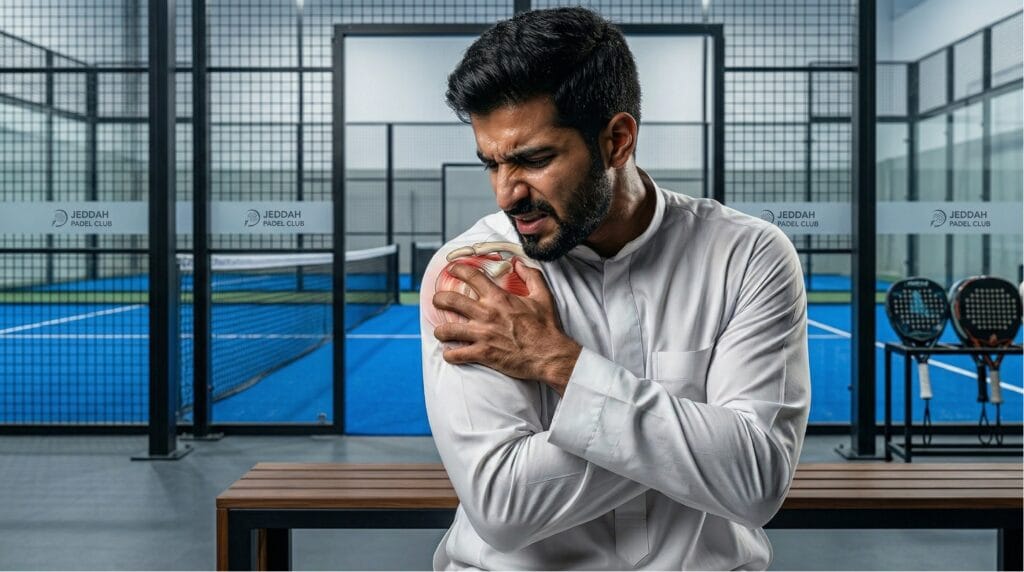
Have you started feeling a burning, nagging pain on the outside of your elbow that radiates down to your forearm? Have simple daily tasks—like pouring a cup of coffee, turning a doorknob, or even shaking a friend’s hand—become painful chores? If you love playing padel or tennis in Jeddah, simply gripping your racket might have become a nightmare.
This highly frustrating condition is known as “Tennis Elbow.” Ironically, 95% of people suffering from this issue have never touched a tennis racket in their lives! It is an injury that frequently affects office workers, painters, homemakers, and weightlifters alike.
- The Comprehensive Guide to Tennis Elbow: Causes, Prevention, and Lasting Relief
What Exactly is Tennis Elbow?
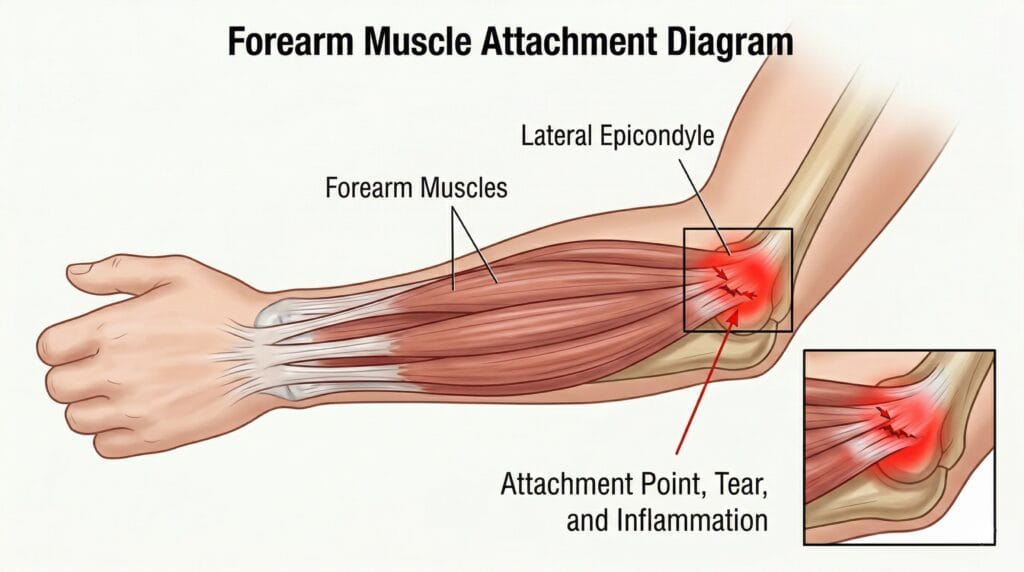
Elbow pain associated with “Tennis Elbow” (Lateral Epicondylitis) is essentially inflammation or micro-tears in the tendons connecting your forearm muscles to the outer bony part of your elbow. This usually happens due to repetitive strain on these muscles and tendons over long periods.
Despite its popular name, statistics show that this condition is mostly related to lifestyle and occupational habits rather than just sports. It is an overuse injury that develops slowly, creeping up on you until the pain becomes impossible to ignore.
The Hidden Causes Behind Your Elbow Pain
To understand the problem, you have to look at your forearm anatomy. The muscles controlling the opening and closing of your fingers do not live in your palm. Instead, they run along your forearm and attach to a small bony bump on the outside of your elbow.
When you perform repetitive motions that require a strong grip—such as playing a padel match, using a computer mouse for hours, or twisting a screwdriver—you place immense stress on this small tendon.
Over time, without sufficient rest, tiny micro-tears begin to form. This tearing leads to severe inflammation, a sudden drop in grip strength, and a stabbing pain whenever you try to use your forearm muscles.
Daily Habits That Trigger the Pain
- Office Work: Using a computer mouse or typing on a keyboard for long hours with poor posture.
- Manual Labor: Repetitive use of hand tools, like screwdrivers, scissors, or plumbing and carpentry equipment.
- Sports and Weightlifting: Lifting heavy weights at the gym with incorrect form puts massive pressure on the elbow tendons.
- Household Chores: Repetitive daily activities like cooking, cleaning, painting, or playing musical instruments.
(Medical Note: If the pain is on the inside of your elbow, this is a similar condition known as “Golfer’s Elbow,” and our mechanical treatment approach for it is very similar).
Common Symptoms You Should Never Ignore
Tennis elbow symptoms typically start gradually and worsen over time. It is crucial to pay attention to these warning signs early on:
- Localized Pain: A burning sensation or pain on the outside of the elbow that may travel down to the forearm and wrist.
- Weak Grip: A noticeable loss of grip strength, making simple tasks like opening a jar extremely painful and difficult.
- Morning Stiffness: Feeling stiffness or rigidity in the elbow joint right after waking up.
- Pain with Movement: The pain clearly intensifies when turning a doorknob, gripping objects, or bending the wrist.
The Hidden Secret: Is Your Neck Causing Your Elbow Pain?
This is where holistic assessment shines. Many patients receive local treatments for their elbows for months with no improvement. The reason is that the real problem was never in the elbow to begin with!
Your arm is not a detached part of your body; it is a mechanical and neurological extension of your neck and shoulder.
- Neurological Connection: The nerves that power and control your elbow and forearm muscles exit from your lower neck. If you have stiffness or blockages in these vertebrae, the nerve signals weaken, leaving your forearm muscles highly prone to rapid tearing.
- Mechanical Connection (Kinetic Chain): If your shoulder joint is stiff and weak, your body will compensate by placing all the movement load on the much smaller elbow joint. This eventually leads to the elbow breaking down from exhaustion.
The golden rule at Rikaz: To successfully treat your elbow, we have to ensure that your neck and shoulder are performing their mechanical functions properly!
Home Remedies and Exercises to Relieve Elbow Pain
Before resorting to complex medical interventions, there are several effective steps you can take at home or work. These tips will help relieve elbow pressure and speed up your recovery.
Ergonomic Adjustments at Work
Ensure your desk and chair properly support your body posture to reduce mechanical stress. Your keyboard and mouse should be close to you to prevent overextending your arm unnecessarily.
Keep your elbow at an approximate 90-degree angle while sitting and working. Using a soft wrist support pad can significantly reduce the tension placed on your forearm tendons.
Cold Therapy and Rest
In the early stages of pain, reducing inflammation is your primary goal. Apply an ice pack (wrapped in a cloth to protect your skin) to the painful area of your elbow for 15 to 20 minutes.
Avoid activities that aggravate the pain for a few days. Give your arm enough rest to allow the delicate tissues to start their natural healing process.
Wrist Extensor Stretch
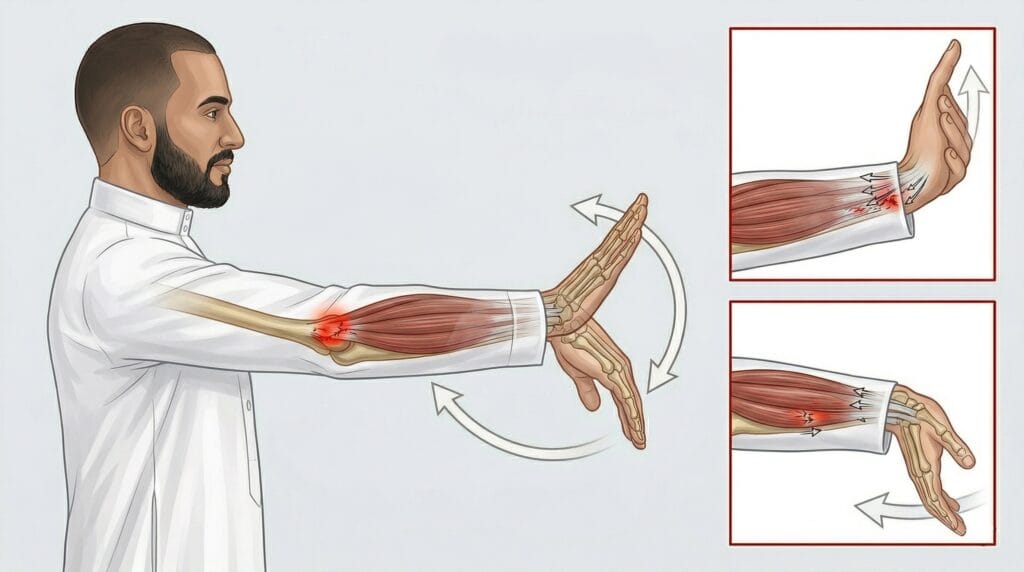
This exercise is one of the best ways to relieve muscle tension in the forearm. Extend your injured arm straight out in front of you, making sure your elbow is completely straight and your palm is facing down.
Use your healthy hand to gently bend the wrist of the injured arm downward and towards your body. Keep bending until you feel a comfortable stretch in your forearm. Hold this position for 15 to 30 seconds, and repeat it 3 times daily.
How Do We Break the Pain Cycle at Rikaz Clinic?
Our tennis elbow treatment protocol does not rely on cortisone injections, which can actually weaken the tendon over the long term. Instead, we focus on rebuilding the tissue and restoring your body’s natural mechanical balance:
1. Spinal Adjustments
We start at the source. The doctor performs precise manual adjustments to your lower cervical vertebrae (neck) and upper back to release any mechanical blockages. This frees up the nerves supplying the arm, ensuring full neurological and blood flow to accelerate the healing process.
2. Advanced Myofascial Release
Tendons affected by tennis elbow are often riddled with hardened scar tissue due to repeated micro-tearing. We use specialized manual techniques (such as the Graston technique or deep soft-tissue mobilization) to break down these scars and restore elasticity to the tendon. This stops the friction and significantly reduces pain.
3. Extremity Adjustments (Elbow and Wrist)
Sometimes, the elbow joint or the tiny bones of the wrist lose their precise mechanical alignment due to repetitive movements. Applying a gentle, targeted chiropractic adjustment to these extremity joints restores their proper gliding motion and instantly removes the pressure from your over-strained tendons.
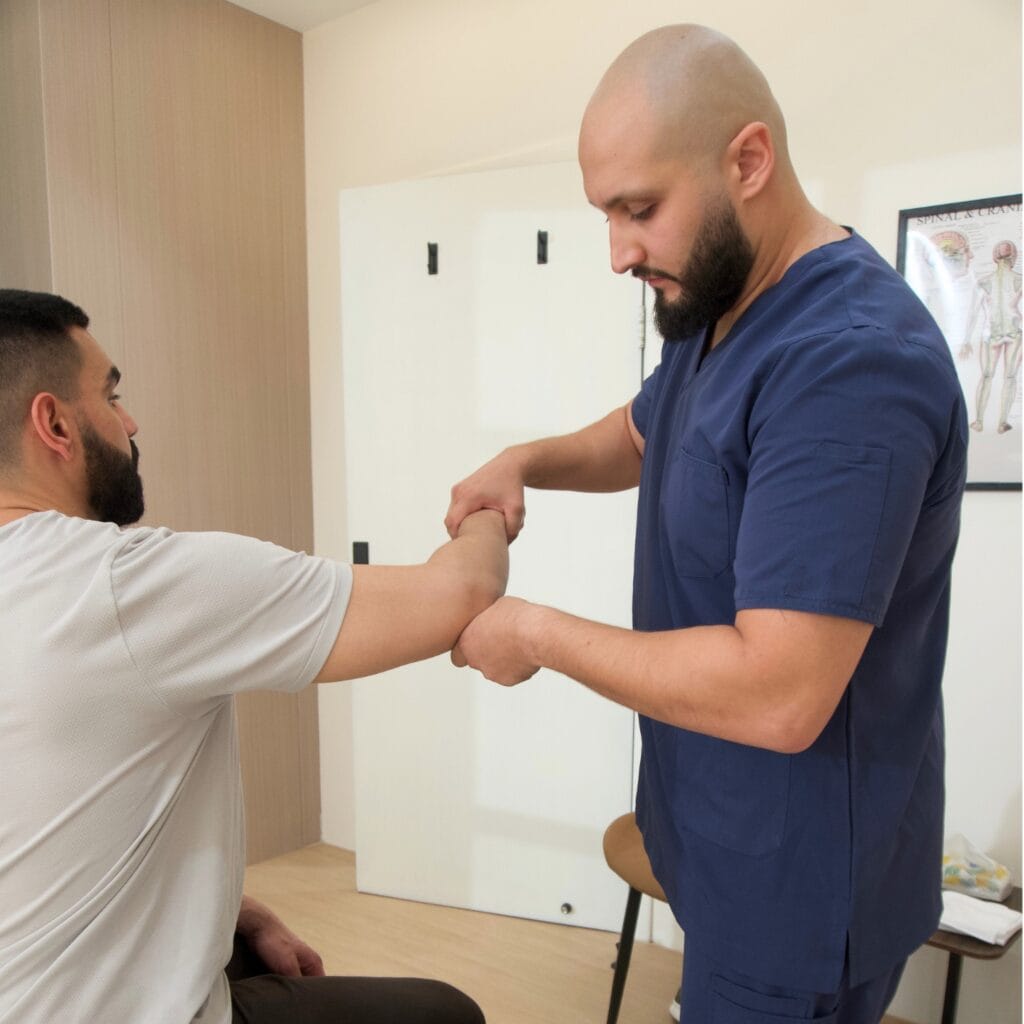
If your elbow pain persists for weeks and does not improve with stretches and rest, it is time to seek expert help. At Rikaz Clinic, we do not just mask the superficial pain; we dig deep to find the root cause of the problem.
Led by Dr. Mohammad Yashar, an RMIT University (Melbourne) graduate, we rely on a strict “assessment-first” approach. We understand that elbow pain is often the result of faulty movement compensations or dysfunctions in other joints, such as the shoulder, neck, or upper back.
Through advanced chiropractic care and precise adjustments, we work to restore proper joint movement, improve nerve signaling, and correct the entire biomechanics of your arm. We also utilize targeted myofascial release techniques to break down scar tissue within the damaged tendon. This comprehensive approach ensures the pressure is lifted off the injured tendons and prevents the injury from returning.