Scoliosis Signs in Children: 4 Warning Signs You Shouldn’t Ignore
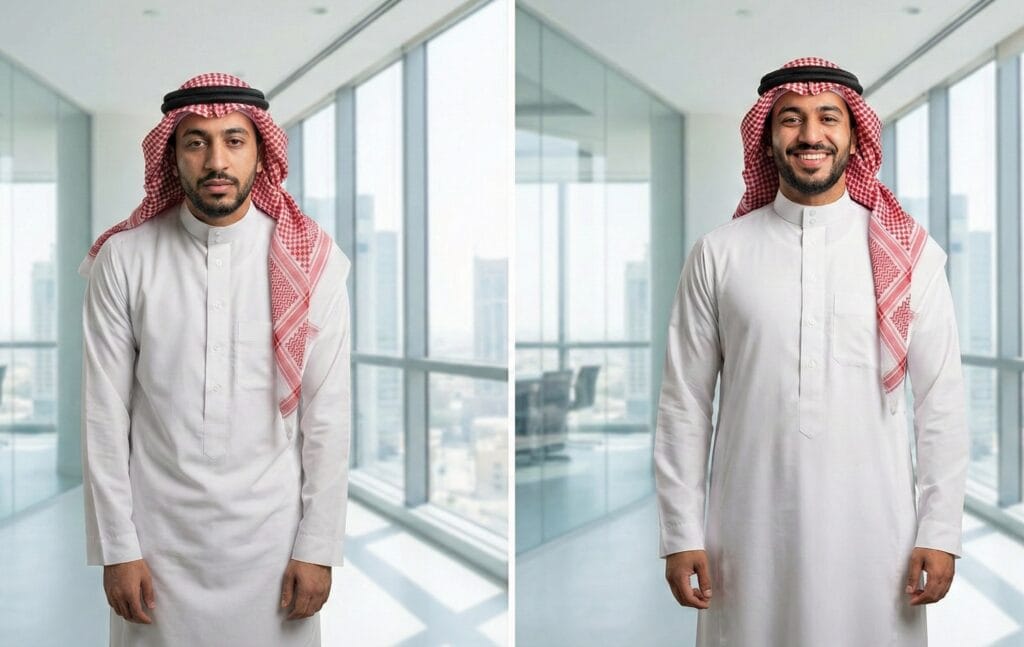
While standing behind your teenager, you might suddenly notice that one of their shoulders appears higher than the other, or that their t-shirt doesn’t seem to hang evenly across their body. At first, it is easy to brush this off as just “bad posture” or the result of carrying a heavy school backpack, simply telling them to stand up straight. But what if it isn’t just a bad habit?
At Rikaz Chiropractic Clinic in Jeddah, we frequently see cases where parents delayed seeking help because they didn’t recognize the early scoliosis signs in children. Early detection during a child’s active growth phase is the golden key to managing this condition successfully and preventing severe complications.
In this article, we will provide you with a practical, simplified guide to understanding scoliosis, and teach you how to perform a quick, preliminary screening on your children right at home.
- Scoliosis Signs in Children: 4 Warning Signs You Shouldn't Ignore
- What Exactly is Scoliosis? (It's Not Just Slouching)
- The Core Difference: Is it "Structural" or "Functional"?
- 4 Scoliosis Signs in Children You Can Spot at Home
- 💡 The Golden At-Home Check: Adam’s Forward Bend Test
- How We Help Scoliosis Patients at Rikaz Clinic
- Don't Leave Your Child's Growth to Chance… Early Detection Makes All the Difference!
What Exactly is Scoliosis? (It’s Not Just Slouching)
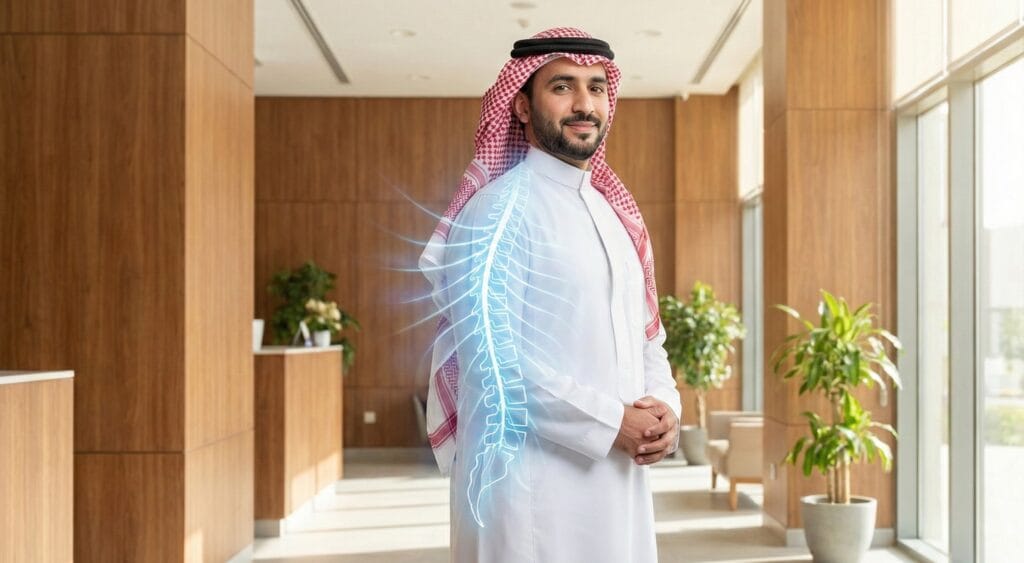
A healthy spine, when viewed from behind, should look like a perfectly straight line down the middle of the back. However, in cases of scoliosis, the spine develops a lateral (side-to-side) curve that looks like a “C” or an “S” shape. This curve is rarely just a simple tilt to the left or right; it is almost always accompanied by a rotation (twisting) of the vertebrae themselves, which often causes the ribs to stick out on one side.
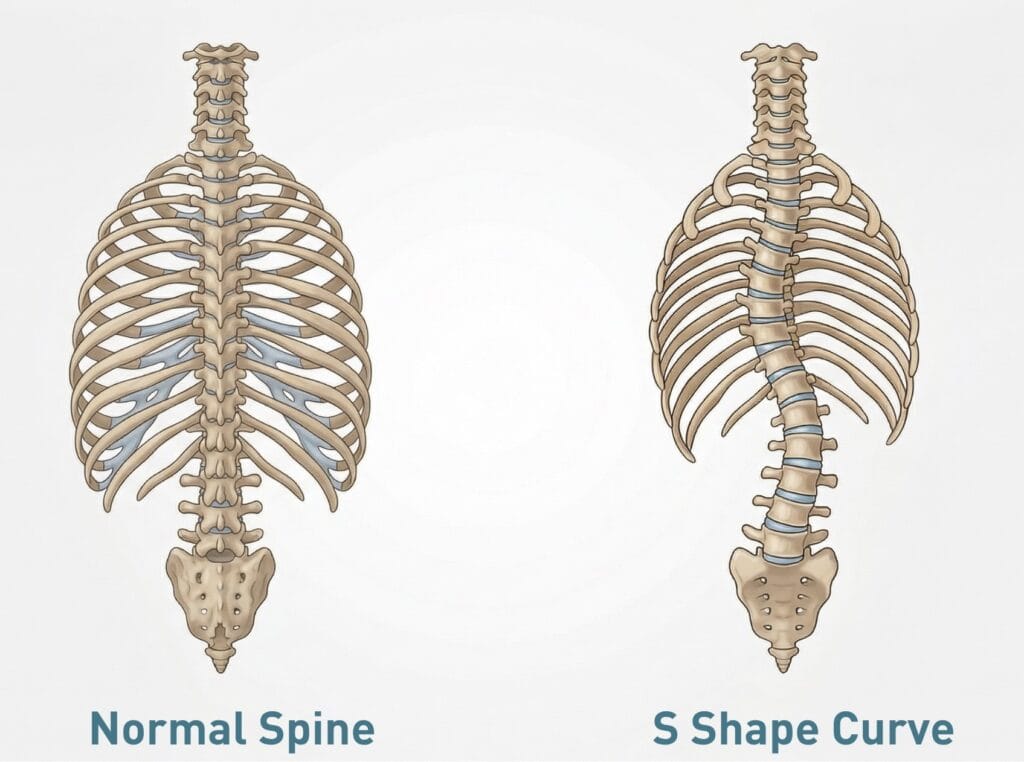
Crucial Medical Fact: In the vast majority of cases (around 80%), scoliosis is classified as “Idiopathic.” This means it is not caused by a specific disease or injury. Instead, it usually appears and progresses rapidly during the major growth spurts just before puberty (typically between the ages of 10 and 15)
The Core Difference: Is it “Structural” or “Functional”?
Before you panic, it is incredibly important to know that not every curve in the back is permanent scoliosis. At Rikaz Clinic, the very first thing your Doctor of Chiropractic will do is differentiate between two main types:
1. Functional Scoliosis (The “False” Curve)
This type is considered a temporary or functional curve. The spine itself is actually healthy and structurally straight, but it appears curved because the body is compensating for another issue, such as:
- A noticeable difference in leg length.
- A severe muscle spasm on one side of the back pulling the spine out of alignment.
- Severe leaning to one side to avoid nerve pain, often seen in cases like a Herniated Disc.
- The Good News: Once the underlying cause is treated (like relaxing the muscle or correcting the pelvic tilt), the spine naturally returns to its straight position.
2. Structural Scoliosis (The “True” Curve)
Here, the curve is real and built into the physical structure of the vertebrae. This curve does not disappear when the child changes their posture or lies down. This type requires careful monitoring and specialized mechanical management to prevent the curve’s angle (the Cobb Angle) from increasing as the child grows.
4 Scoliosis Signs in Children You Can Spot at Home
Do not wait for your child to complain of back pain, because early-stage scoliosis rarely causes any pain at all. Perform this simple visual screening regularly:
- Uneven Shoulders: Does one shoulder look noticeably higher or more prominent than the other?
- Uneven Hips and Waist: Does one hip seem to sit higher, or is the waistline asymmetrical (is there a deeper skin fold on one side compared to the other)?
- Prominent Shoulder Blade: Does one of the shoulder blades stick out further from the back than the other?
- Off-Center Head: Does the head appear to lean to one side, failing to align perfectly over the center of the pelvis?
💡 The Golden At-Home Check: Adam’s Forward Bend Test
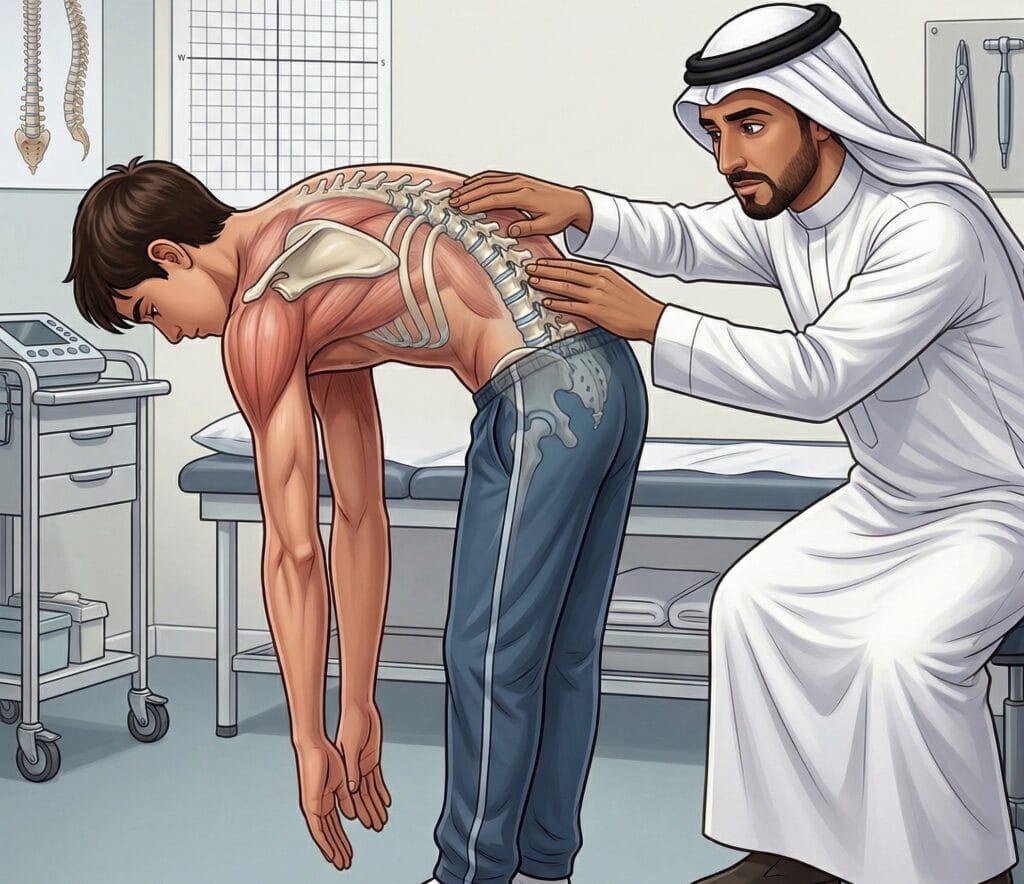
This is the standard orthopedic test used worldwide for early scoliosis screening:
- Ask your child to stand up straight with their knees locked and feet together.
- Have them bend forward from the waist (as if they are trying to touch their toes), letting their arms hang down freely toward the floor.
- Stand behind them and look at the level of their back and ribcage. If you notice that one side of the back (or ribs) is higher than the other, forming a “rib hump,” this is a very strong indicator of spinal rotation and requires an immediate professional assessment.
How We Help Scoliosis Patients at Rikaz Clinic
If you do spot any scoliosis signs in children, the first step is accurate assessment, not fear. At Rikaz Chiropractic Clinic in Jeddah, led by Dr. Mohammad Yashar (a graduate of the rigorous 5-year program at RMIT University in Melbourne, Australia), we provide a professional biomechanical evaluation that meets the highest global standards.
Our methodology for managing scoliosis includes:
- Precise Radiological Diagnosis: Carefully analyzing X-rays to accurately measure the “Cobb Angle” and determine if the curve is structural or functional.
- Customized Chiropractic Adjustments: While chiropractic care cannot “cure” or completely reverse structural scoliosis, gentle and highly specific manual adjustments are vital. They help improve the mobility of stiff vertebrae, reduce mechanical pressure on the nerves, prevent pain, and optimize the function of the nervous system.
- Rehabilitative Exercises: Designing a customized exercise program to strengthen weak muscles and stretch tight ones, which helps support the spine and aids in Posture Correction.