Lower Back Pain After Sitting: Practical Steps and When to Seek Care
If your lower back hurts after desk work or driving, review the whole day: sitting time, movement breaks and how symptoms affect your activities. When pain occurs is useful information for an examination. It does not, by itself, prove a disc problem or damage to your back.
- Lower Back Pain After Sitting: Practical Steps and When to Seek Care
Review the whole working day
Consider your workspace and movement opportunities, and note what makes daily activities more comfortable.
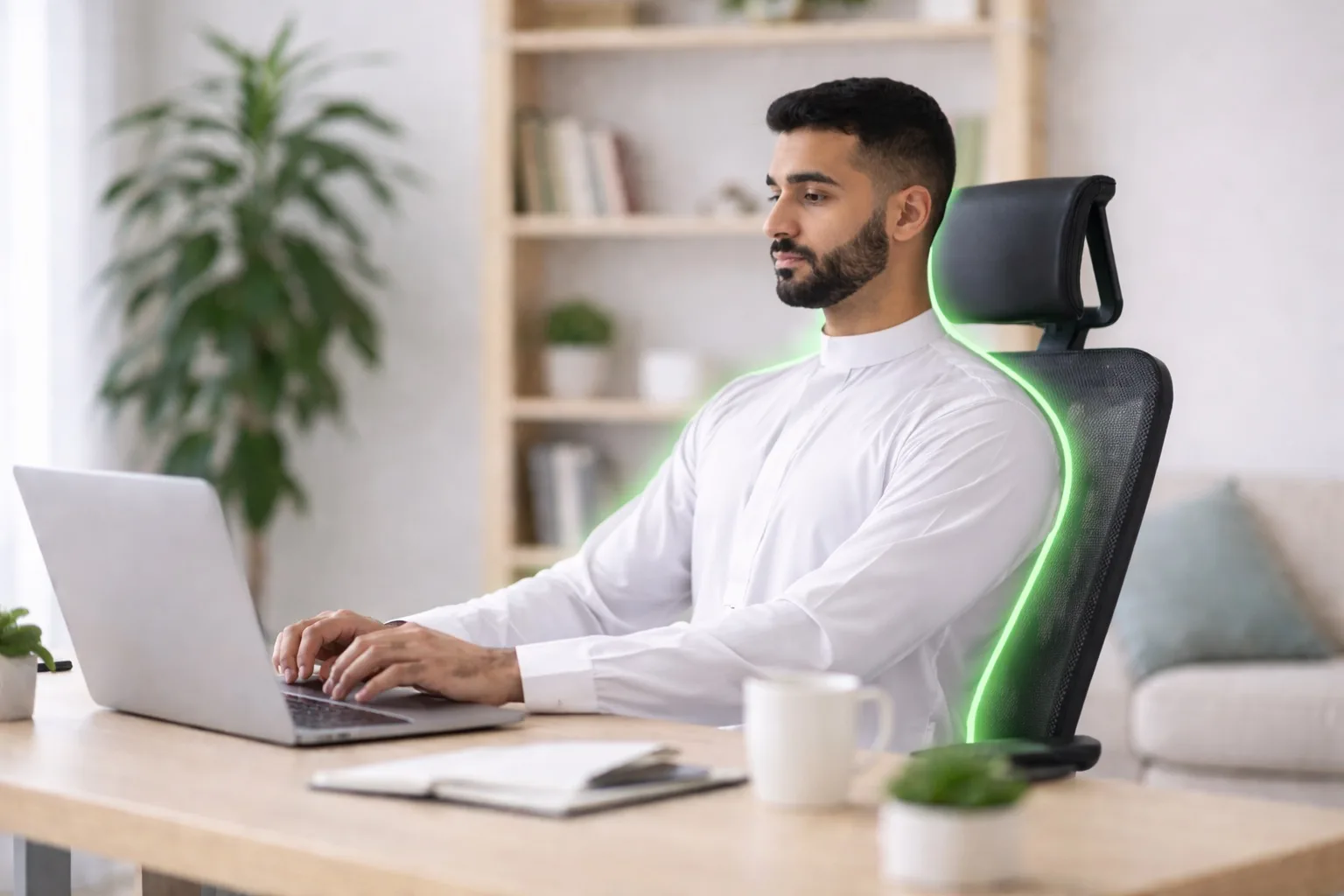
Why review your sitting setup?
The Saudi Ministry of Health advises supporting the back and avoiding long periods in one position. Supporting your feet and arranging your workspace are practical starting points. Aim for a comfortable setup that allows position changes rather than holding yourself rigidly throughout the day.
A checklist for your next working day
- Before work: bring frequently used items and your keyboard within comfortable reach.
- Between tasks: use a natural transition to stand or take a short walk if comfortable.
- When driving: adjust the seat before moving and plan safe stops on longer journeys.
- After work: choose a manageable light activity rather than automatically adding more sitting time.
- At the end of the day: note comfortable sitting time and the effect on work or sleep. These give you meaningful comparison points.
This is not a prescription for a fixed number of minutes or repetitions. Adapt the experiment to your ability and avoid pushing through worsening symptoms.
Is complete rest a better option?
NHS back pain advice supports remaining active where possible and avoiding prolonged bed rest. Stop an exercise that worsens symptoms and seek advice. Discuss the suitability of medicines or heat and cold with a professional rather than copying someone else’s plan.
What if pain travels into your leg?
Nerve irritation can involve radiating pain, tingling or weakness, as described in the Saudi Ministry of Health’s sciatica information. This pattern needs assessment rather than a home movement test. Loss of bladder or bowel control, numbness around the saddle area, or severe or worsening neurological symptoms in both legs require emergency care.
When should you arrange an assessment?
Seek care if pain disrupts normal activities or is not improving. Fever or rapid deterioration warrants urgent assessment. Mention previous injuries, illnesses and medicines; the chair is only one part of the history.
Useful questions include: What needs to be ruled out? What activity is appropriate now? How will we judge whether the plan helps? Agree on a practical goal such as more comfortable work or driving, and a clear review point.
Frequently asked questions
Do I need an expensive office chair?
Before buying, try adjusting the available chair and planning movement opportunities. Ask which changes matter for your situation rather than assuming one product will solve it.
Is all sitting-related pain sciatica?
No. The timing of symptoms cannot confirm sciatica. See our sciatica information if leg symptoms are involved.
Read more: lower back pain
This is general education, not a diagnosis or an individual exercise programme.