Cervical Spondylosis: What Scan Findings Mean and When to Seek Assessment in Jeddah
Has your neck scan mentioned “cervical spondylosis” or “disc-height loss”? Before choosing treatment, ask how the finding relates to your symptoms. Use this guide to prepare questions for an assessment in Jeddah rather than diagnosing yourself from a report.
- Cervical Spondylosis: What Scan Findings Mean and When to Seek Assessment in Jeddah
- What is cervical spondylosis?
- Understanding the words in your report
- Does spondylosis explain every symptom?
- When to seek urgent medical care
- Do you need another scan before booking?
- Choosing a care plan
- Prepare for an assessment in Jeddah
- Frequently asked questions
- Understand your report and your next step

Start with your questions.
Is sleep, work or turning while driving your main concern? Bring an existing report and list what you want explained.
What is cervical spondylosis?
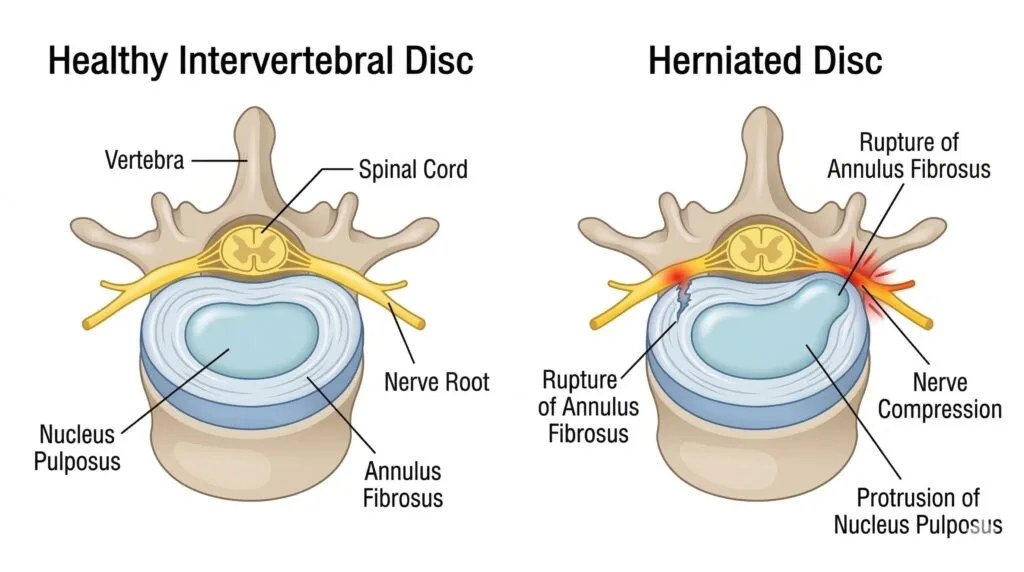
It describes age-related changes in neck discs and joints, including reduced disc height and bone spurs. The American Academy of Orthopaedic Surgeons explains that these findings are common and can occur without symptoms. A scan finding alone does not identify the source of pain.
Understanding the words in your report
Disc-height loss: a change in the space between vertebrae.
Bone spurs: bony growths that can accompany degeneration.
Stenosis: narrowing of the spinal canal or nerve openings. Ask where it is and how it matches your examination.
X-rays show bones; MRI helps assess discs, nerves and the spinal cord. Mayo Clinic describes diagnosis as an examination with appropriate tests. Ask which findings change your care rather than assuming every term needs treatment.
Does spondylosis explain every symptom?
Pain or stiffness can occur, and an affected nerve can cause arm symptoms. Numbness alone is not a diagnosis: strength, sensation, reflexes and movement need assessment. Our neck pain with hand numbness guide can help you prepare questions.
When to seek urgent medical care
Seek emergency care for new walking difficulty, new loss of bladder or bowel control, or sudden loss of coordination. Limb weakness, sudden severe or rapidly worsening pain, and tingling with neck or arm pain require urgent medical assessment. These warning signs appear in the NHS guide. Do not wait for a routine appointment or begin manual treatment when they occur.
Do you need another scan before booking?
Imaging depends on symptoms, examination and clinical circumstances, as the ACR and RSNA imaging guide explains. Bring existing reports; do not order a new scan because of this article. Ask whether a test would change your care.
Choosing a care plan

Options may include appropriate exercises, activity changes, physiotherapy and clinician-selected medication. Mayo Clinic notes that severity guides treatment; worsening neurological symptoms may require surgical assessment. Goals concern symptoms and function, not a guarantee of removing bony changes.
Manual techniques may help some neck pain, but are not suitable for everyone. NCCIH describes potential benefits, limited evidence, temporary side effects and rare reported serious complications. Discuss suitability, risks and alternatives. Joint sounds do not mean a disc has been restored.
Prepare for an assessment in Jeddah
List symptom onset, aggravating and easing activities, medication and previous injuries. Choose a practical goal: turning comfortably while driving or managing your workday. Ask when progress will be reviewed and what would trigger referral.
Frequently asked questions
Does the scan mean I need surgery?
The report alone cannot decide this. Discuss symptoms, examination and response to care with your doctor, particularly with weakness or walking changes.
Can I book with Rikaz?
Without urgent warning signs, you can ask about a chiropractic assessment at Rikaz, Lana Plaza, Jeddah. Assessment determines suitability or referral. Our chiropractic and physiotherapy comparison explains questions to ask before choosing a visit.