Sciatica vs Lower Back Pain: 3 At-Home Tests to Tell the Difference
You wake up in the morning, getting ready for your workday in Jeddah. But the moment you try to get out of bed, a sudden, sharp pain strikes your lower back. At first, you might think it is just fatigue from sitting too long at your office desk yesterday. But then, you notice this pain isn’t staying in your back—it
This is when the worry sets in, along with the most common question we hear at our clinic: Is this just a normal muscle spasm that will go away with rest, or do I have a serious nerve problem?
Knowing the difference between sciatica vs lower back pain is the crucial first step toward getting the right treatment. You cannot treat an inflamed, compressed nerve the same way you treat a simple pulled muscle. At Rikaz Chiropractic Clinic, we are going to explain the medical and mechanical differences between the two, and provide you with safe, simple tests you can do right at home.
What is Normal (Mechanical) Lower Back Pain?
Standard lower back pain, medically known as “Mechanical Low Back Pain,” originates from the muscles, ligaments, or the facet joints of the spine itself. This type of pain is incredibly common and is usually highly localized. This means you can easily point a finger directly at the spot on your lower back that hurts.
Key characteristics of mechanical back pain:
- The pain generally gets worse with specific physical movements, such as bending forward, twisting, or lifting heavy objects.
- You feel a deep sense of stiffness and tightness in your lower back, especially first thing in the morning or after sitting for long periods.
- The pain remains confined to the back and buttocks area; it rarely travels below the knee. To learn more about what causes this, visit our Lower Back Pain Treatment page.
What is Sciatica? (When the Nerve Screams)
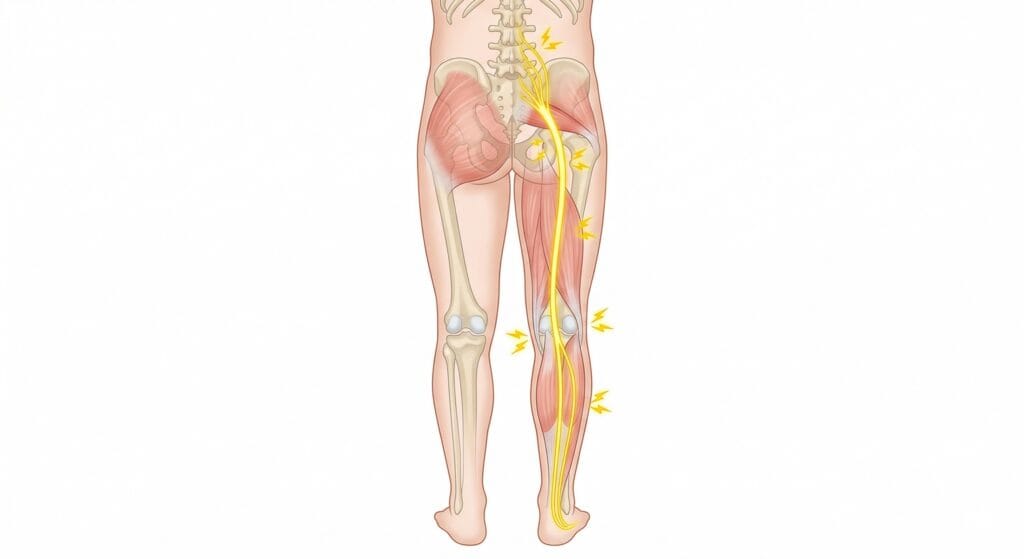
On the other hand, sciatica is not actually a disease or an injury in itself; it is a “symptom” indicating that something is compressing or irritating your sciatic nerve. The sciatic nerve is the longest and thickest nerve in the human body. It begins in the lumbar spine (lower back), passes deep through the buttocks, and travels all the way down the back of each leg to your toes.
Key characteristics of sciatica:
- The pain is rarely described as a dull ache. Instead, patients describe it as an “electric shock,” a “burning sensation,” or feeling like a “hot poker” shooting down the leg.
- It is frequently accompanied by neurological symptoms such as numbness, a “pins and needles” tingling sensation, or noticeable muscle weakness in the leg or foot.
- It almost always affects only one side of the body at a time (either the right or left leg). Read more about our targeted Sciatica Treatment at Rikaz Clinic.
3 At-Home Tests for Sciatica vs Lower Back Pain
If you are at home and want to get a preliminary idea of what is happening in your spine before visiting a Doctor of Chiropractic, you can try these simple mechanical tests.
(Disclaimer: These tests do not replace a professional medical diagnosis. If you feel severe, unbearable pain, stop the test immediately).
1. The Straight Leg Raise Test
This is the most famous orthopedic test used worldwide to check for sciatic nerve irritation.
- How to do it: Lie flat on your back on a comfortable, firm surface (like a yoga mat). Ask a friend or family member to slowly lift your painful leg upward while keeping your knee completely straight. (You can also do this yourself if you move very slowly).
- The Result: If you feel a sharp, shooting pain or an electric shock traveling down the back of your thigh and calf when your leg is lifted between a 30 to 70-degree angle, this is a very strong indicator that the sciatic nerve is compressed. If you only feel a dull ache strictly in your lower back, it is likely standard mechanical back pain.
2. The Slump Test
This test places the entire sciatic nerve under maximum tension from your neck down to your toes.
- How to do it: Sit on the edge of a chair with your feet hanging freely. Relax your shoulders and completely slump or round your back forward (like you are slouching heavily). Next, bend your neck so your chin touches your chest. Now, slowly straighten your painful leg out in front of you, and pull your toes up toward your face.
- The Result: Stretching the nerve this way will immediately provoke sciatica if it is inflamed, causing a burning pain down the leg. To perfectly confirm the sciatica vs lower back pain dilemma: keep your leg straight, but look up at the ceiling. If the pain in your leg disappears just by lifting your head, it confirms the issue is a continuous nerve problem originating from your spine!
3. The Heel and Toe Walking Test
The lower spinal nerves directly control the muscles in your feet and calves.
- How to do it: Try walking a few steps across the room on your heels (keeping your toes pointed up in the air). Then, turn around and try walking a few steps entirely on your tiptoes (lifting your heels off the ground).
- The Result: If you find it noticeably difficult to do this, or if you feel a distinct weakness that prevents you from lifting your foot on one side compared to the other (a condition known as “Foot Drop”), this indicates severe nerve compression that requires immediate specialized attention.
Don’t Ignore the Signals: The Rikaz Clinic Methodology
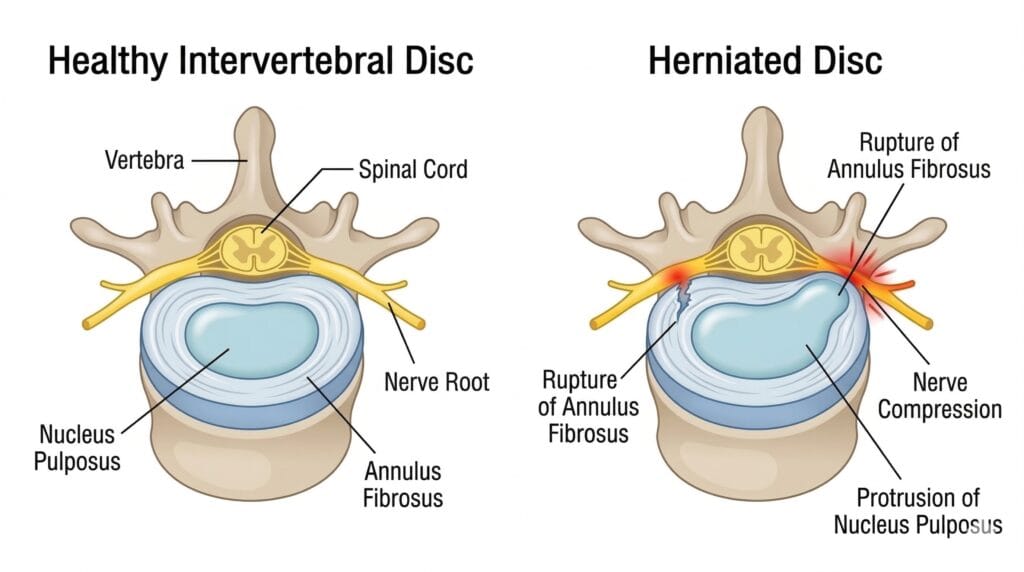
Figuring out the difference between sciatica vs lower back pain at home is a great first step for your own awareness. However, identifying the “Root Cause” of that compression is what makes the difference between temporary relief and permanent healing. Is the nerve pressure caused by a herniated disc? Spinal stenosis? Or a misalignment in the Sacroiliac (SI) joint?
At Rikaz Chiropractic Clinic in Jeddah, we do not rely on guesswork. Led by Dr. Mohammad Yashar, who completed a rigorous 5-year academic degree at RMIT University in Melbourne, Australia, we guarantee an assessment that matches the highest global medical standards.
Our Assessment and Treatment Protocol Includes:
- A detailed and precise neurological and orthopedic examination.
- A thorough analysis of your biomechanics, posture, and gait (how you walk).
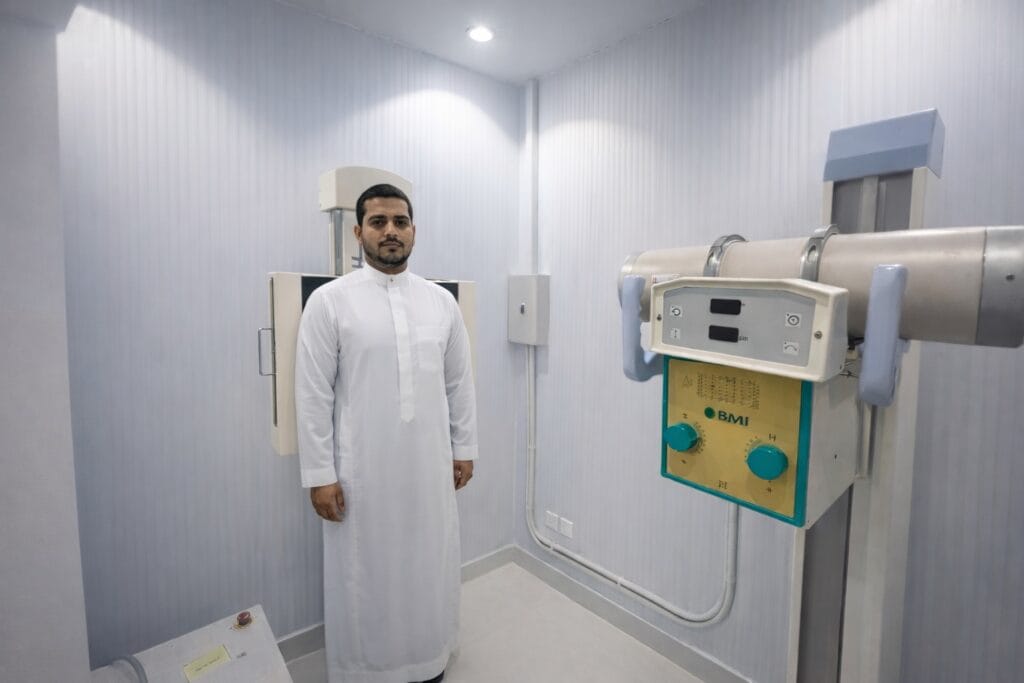
- Careful reading and interpretation of your X-rays or MRI scans.
- Delivering safe, gentle, and highly specific Chiropractic Adjustments. These adjustments are designed to remove mechanical pressure from the nerves and restore proper spinal alignment, allowing your body to heal naturally without relying on heavy medications or surgery.