What is Chiropractic? Your Comprehensive Health Guide in Saudi Arabia
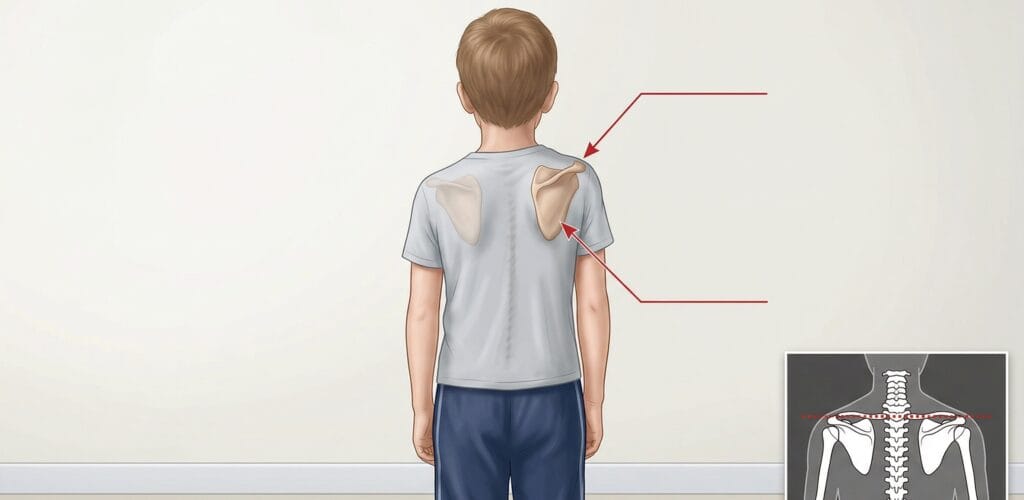
Do you find yourself stuck in King Road or Tahlia Street traffic in Jeddah, feeling a gradual stiffness creeping into your neck and lower back? Or perhaps you spend long hours in front of a computer screen, only to wake up the next day with a nagging headache and restricted movement?
These pains are not just a “passing fatigue” that you can ignore; they are clear warning signals from your body. This is where the specialty of chiropractic care comes in as an effective medical solution that focuses on treating the root cause of the problem rather than temporarily numbing it.
- What is Chiropractic? Your Comprehensive Health Guide in Saudi Arabia
- What is True Chiropractic Care?
- The Historical Roots and Scientific Evolution of Chiropractic
- Rigorous Academic Education: Why Trust a Doctor of Chiropractic?
- The Core Philosophy of Chiropractic: How Does Your Body Heal Itself?
- What Conditions Require a Visit to a Chiropractor?
- Chiropractic in Saudi Arabia: A Regulated and Safe Medical Profession
- Rikaz Mechanical Tips: Daily Habits for a Healthy Spine
- Start Your Healing Journey Today
What is True Chiropractic Care?
Many believe chiropractic is limited to making “cracking” sounds in the joints for momentary relief. However, the scientific and medical reality is much deeper.
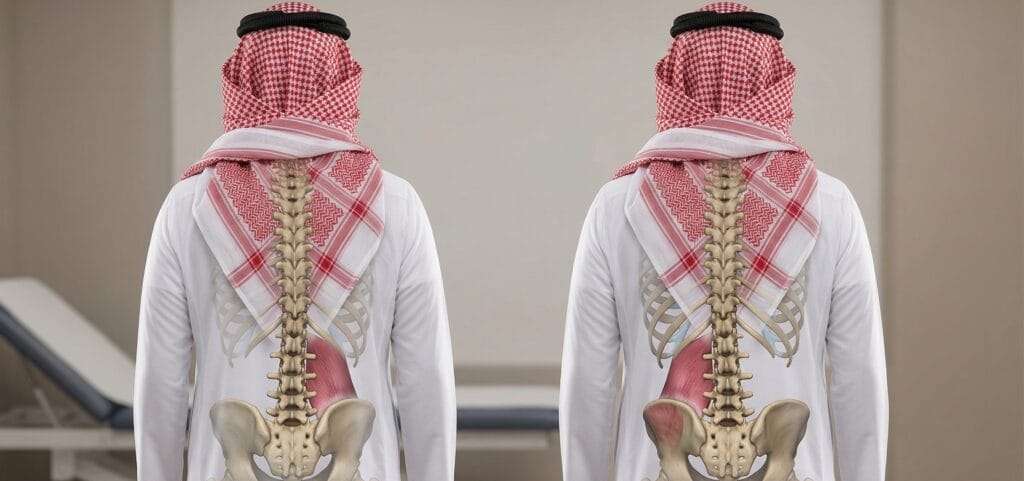
Chiropractic is defined as a healthcare profession that focuses on the diagnosis, treatment, and prevention of mechanical disorders of the musculoskeletal system. It pays special attention to the effects of these mechanical disorders on the function of the nervous system and overall health.
Simply put, this science relies on a fundamental principle: your physical health is closely linked to the biomechanical integrity of your spine. When your joints move freely, your nervous system operates at a higher efficiency, which positively reflects on your body’s ability to heal itself.
The Historical Roots and Scientific Evolution of Chiropractic
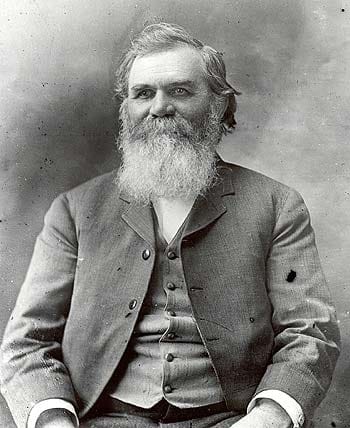
The official beginnings of the chiropractic profession date back to 1895 in the United States of America, founded by Daniel David Palmer. In that era, the focus was on the philosophy connecting spinal misalignment with weakened nerve signals.
Over the decades, chiropractic has evolved remarkably. It transitioned from a practice based on theoretical philosophy to a precise medical specialty grounded in clinical research and Evidence-Based Practice.
Rigorous Academic Education: Why Trust a Doctor of Chiropractic?
Today, chiropractic care no longer relies on individual interpretations or short courses. It has become a precise medical specialty requiring intensive academic study comparable to years of medical school.
Chiropractic students at international universities study the same foundational subjects as medical students. This includes detailed anatomy (on human cadavers), neurology, physiology, and biomechanics, along with intensive training in reading and analyzing X-rays and MRI scans.
A Look at Global Standards for Chiropractic Colleges
To give you a clearer picture of the academic effort required to certify a doctor of chiropractic, let’s compare some prominent standards and universities worldwide:
- United States of America (The Birthplace of Chiropractic): Palmer College of Chiropractic is one of the most prestigious institutions. Admission requires prior university study in sciences, followed by 4 years of intensive study to earn a “Doctor of Chiropractic” (D.C.) degree, totaling over 4,200 hours of academic and clinical education.
- United Kingdom: Universities like AECC University College offer degree programs spanning 4 to 5 years, culminating in a Master’s degree in Chiropractic, and are strictly regulated by the General Chiropractic Council (GCC).
- Australia (The Strict Australian Standard): Australia features one of the most rigorous and comprehensive educational curricula in the world. Leading universities like RMIT University in Melbourne and Macquarie University offer programs spanning 5 full academic years (a Bachelor’s followed by a Master’s in Clinical Chiropractic).
Medical Authority at Rikaz Clinic: Australian Quality in the Heart of Jeddah
To ensure the highest levels of safety and medical care for our patients in Jeddah, Rikaz Clinic operates under the leadership of Dr. Mohammad Yashar, a graduate of the prestigious RMIT University in Melbourne, Australia.
Studying this specialty at RMIT University means undergoing 5 years of intensive medical and clinical training. This long academic path ensures the graduation of doctors with exceptional ability in:
Accurate Diagnosis: Ruling out any serious medical conditions (like fractures or tumors) before beginning any manual therapy.
Radiological Analysis: Reading X-rays with high proficiency to determine exact angles of spinal deviation.
Safe Application: Using calculated manual techniques customized for each patient based on their physical structure and health condition.
At Rikaz Clinic, we never compromise on scientific standards, because we understand that your spine is the central axis of your health and quality of life.
The Core Philosophy of Chiropractic: How Does Your Body Heal Itself?
To understand how chiropractic works, we must view the body as an integrated communication network. The brain is the central computer, and the nervous system is the cable network transmitting commands to every cell, muscle, and organ in your body.
The spinal cord (the main cable) passes safely inside the spinal canal formed by your vertebrae. The core philosophy of chiropractic is both simple and profound: The body possesses an amazing innate ability to heal itself, provided there are no interferences in its nervous system.
What is a “Subluxation” or Mechanical Dysfunction?
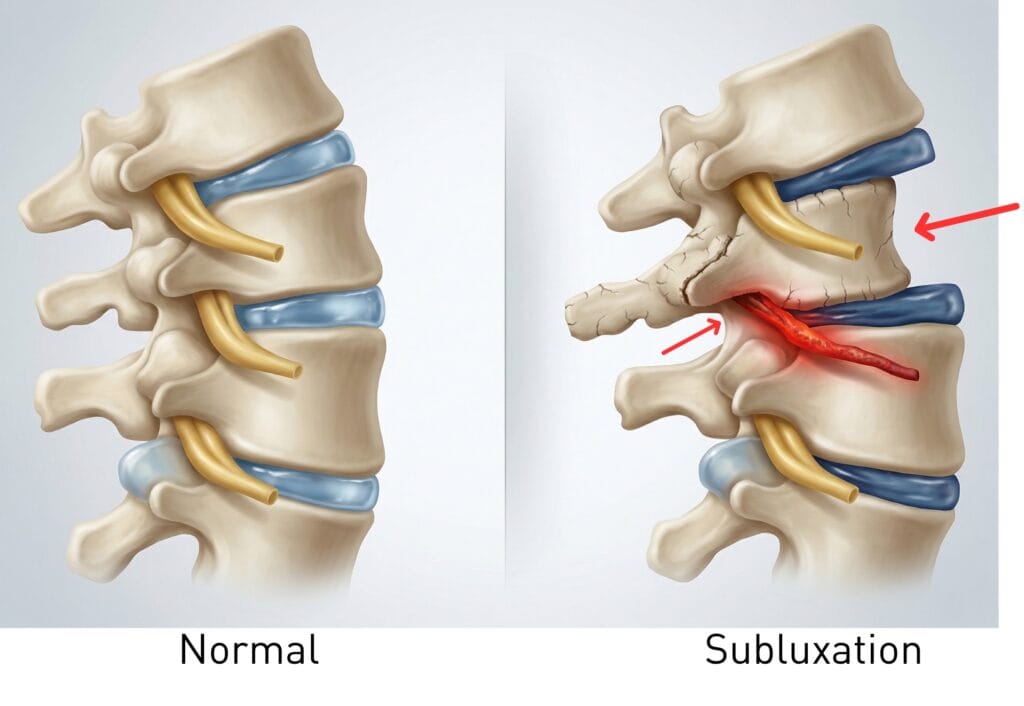
As a result of prolonged poor posture, sports injuries, or even psychological stress, some spinal vertebrae may lose their normal mobility or slightly deviate from their correct alignment. This mechanical dysfunction is medically termed a “Subluxation.”
When this dysfunction occurs, it creates pressure or irritation on nearby nerves, hindering the clear transmission of nerve signals between the brain and the body. The role of a chiropractor is to accurately detect these subluxations and use gentle manual adjustments to restore normal joint movement, which relieves pressure on the nerve and allows the body to begin its natural healing process.
What Conditions Require a Visit to a Chiropractor?
Some believe chiropractic is only for those suffering from severe back pain, but the therapeutic scope is much broader. At Rikaz Clinic, we help patients daily overcome:
- Neck Pain & Shoulder Stiffness: Especially “Text Neck” syndrome resulting from continuous bending to use mobile phones.
- Sciatica: Sharp pain radiating from the lower back down the leg due to sciatic nerve compression.
- Tension Headaches & Migraines: Studies show that many chronic headaches originate primarily from muscle tension and dysfunction in the upper cervical spine.
- Disc Bulge (Herniated Disc): Providing conservative, safe treatment programs to relieve pressure on the spinal discs without surgical intervention.
Chiropractic in Saudi Arabia: A Regulated and Safe Medical Profession
Every patient in Jeddah and the Kingdom generally has the right to seek the highest degrees of safety and reliability before trusting anyone with their spinal health. Therefore, it is very important to rest assured that the chiropractic profession in Saudi Arabia is a recognized, regulated medical profession subject to strict government oversight to ensure your safety.
To guarantee the highest quality standards, this profession is regulated by two official bodies:
- National Center for Complementary and Alternative Medicine (NCCAM): All chiropractic clinics and practitioners in the Kingdom operate under the direct supervision and licensing of this center. The center sets highly precise legislation and standards for licensing clinics and practitioners; practicing this profession is strictly prohibited except for those holding advanced university degrees from internationally recognized colleges and who have passed thousands of hours of actual clinical training.
- Saudi Commission for Health Specialties (SCFHS): The commission is responsible for the professional classification of practitioners, ensuring their academic qualifications match the highest medical standards before granting them a license to practice.
This precise and strict regulation fully aligns with the goals of Saudi Vision 2030, aimed at elevating the quality of life and healthcare. It is your primary guarantee as a patient that you are receiving safe, effective, and scientifically-based treatment, far entirely from random practices and guesswork.
Rikaz Mechanical Tips: Daily Habits for a Healthy Spine
While you wait for your visit to our clinic, here are 3 simple steps you can start today to reduce pressure on your spine:
- The 20-20-20 Rule for Desk Workers: Every 20 minutes, stand up from your desk for 20 seconds, and look at something 20 feet (about 6 meters) away. This relaxes your eye muscles and relieves tension in your neck vertebrae.
- Proper Sleeping Posture: Avoid sleeping on your stomach entirely, as this position forces your neck to twist at a sharp angle all night. The best position is sleeping on your back with a small pillow under your knees, or sleeping on your side with a pillow between your legs.
- Hydration for the Discs: The intervertebral discs that separate your vertebrae consist largely of water. Make sure to drink 2 to 3 liters of water daily to maintain their flexibility and protect them from wear and dehydration.